Once a rare sight on Malaysian roads, electric vehicles (EVs) are now becoming more visible in neighbourhoods, shopping malls, car parks and highways. With 31,738 fully electric vehicles registered in the first half of 2026 alone, EVs have become one of the clearest signs of Malaysia’s shift towards cleaner mobility.
However, a rising number of vehicles is only one part of the story.
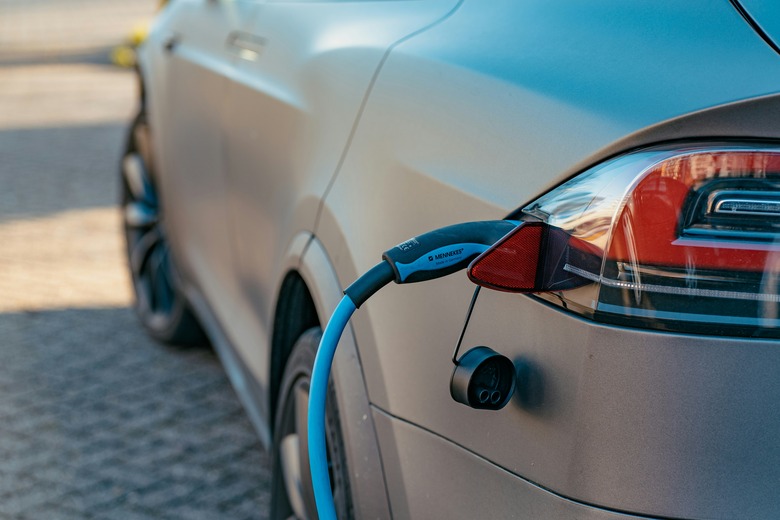
Liew Meena’s research highlights charging infrastructure as a key part of Malaysia’s EV ecosystem, helping build consumer confidence and supporting wider adoption of electric vehicles.
Behind every EV on the road is a wider ecosystem needed to keep it moving. This includes charging infrastructure, grid readiness, renewable energy integration, battery recycling, management technology and a specialised workforce. Without these support systems, Malaysia’s EV transition may struggle to keep pace with growing adoption.
This issue was explored by Liew Meena, a fifth-semester student pursuing the Master of Business Administration (Online Learning) programme at the Faculty of Business and Communication, INTI International University, in her research paper, “Electric Vehicles and Sustainable Business Transformation: Opportunities and Challenges”. The paper was presented on 22 July 2026 at the International Conference on Green Sustainable Technology and Management (ICGSTM).
“What inspired me most was seeing how the global transition towards electric vehicles is accelerating while Malaysia is still in the early stages of building a complete EV ecosystem,” said Liew.
“Most discussions focus on increasing EV sales, but owning an EV is only one small part of the journey. Without reliable charging infrastructure, a skilled workforce, renewable energy integration, battery recycling and supportive policies, the ecosystem cannot grow sustainably.”
Liew’s research explores how Malaysia’s EV ecosystem can create opportunities beyond the automotive sector. Engineering firms, renewable energy providers, software developers, maintenance specialists and digital technology companies all have potential roles to play as the country develops cleaner and smarter mobility solutions.
According to Liew, Malaysia has laid a promising foundation through supportive government policies, tax incentives and growing public awareness. However, progress across the ecosystem remains uneven.
“Vehicle availability has improved, but charging infrastructure is still unevenly distributed, particularly outside major cities,” she explained. “Renewable energy integration is still limited, battery recycling systems are only beginning to emerge, and there remains a shortage of skilled talent in specialised EV technologies.”
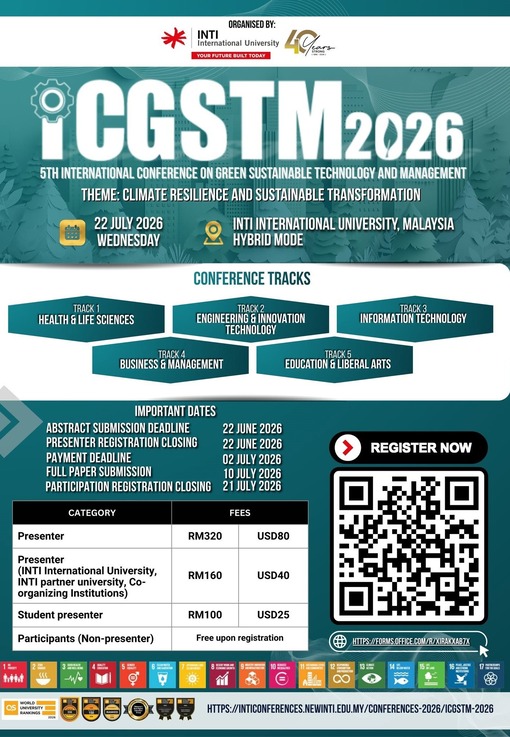
Liew Meena, a Semester 5 student pursuing Master of Business Administration (Online Learning) at the Faculty of Business and Communication, INTI International University, presented her research, “Electric Vehicles and Sustainable Business Transformation: Opportunities and Challenges”, at the International Conference on Green Sustainable Technology and Management (ICGSTM).
Rather than viewing these as separate issues, the research highlights the need to strengthen the EV value chain as a whole. This includes expanding charging infrastructure, supporting local battery manufacturing and recycling, developing financing and insurance solutions, increasing consumer awareness, and encouraging stronger collaboration between government agencies, universities, industry players, utility providers and consumers.
Among these priorities, Liew believes charging infrastructure deserves the greatest attention.
“People often think the biggest challenge is convincing consumers to buy EVs. In reality, consumers gain confidence when they know they can charge their vehicles conveniently, reliably and affordably. Charging infrastructure is the backbone of the entire ecosystem.”
She added that building charging infrastructure goes beyond installing more charging stations. It also requires grid readiness, standardised systems, ongoing maintenance, interoperability between charging networks and stronger integration with renewable energy sources to ensure chargers remain dependable.
The research also points to the economic opportunities that can emerge from a more mature EV ecosystem. New business models such as Charging-as-a-Service, battery leasing, EV subscription services, shared mobility platforms and smart energy management could reshape how companies create value in the mobility sector.
Digital technologies are also expected to play a larger role. Artificial intelligence, predictive maintenance, and real-time energy optimisation could help improve efficiency across charging networks, fleet operations, and energy use, while creating demand for new skills in software development, engineering, installation, and maintenance.
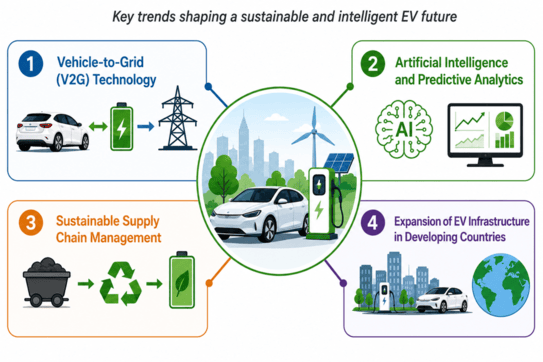
The research highlights the need to strengthen the wider EV value chain, including charging infrastructure, renewable energy integration, battery recycling, digital technologies and specialised talent.
For Malaysia, the opportunity is not only to increase EV adoption, but to build the infrastructure, talent and business capabilities needed to support it. Investments in these areas could strengthen local supply chains, encourage entrepreneurship and help Malaysia participate more competitively in the regional sustainable mobility landscape.
Looking ahead, Liew believes collaboration will determine how quickly Malaysia can move from EV adoption to EV ecosystem maturity.
As Malaysia transitions towards cleaner transportation, her research serves as a timely reminder that the future of electric mobility is about more than the vehicles themselves. It also depends on the systems, skills and partnerships that allow those vehicles to operate reliably, affordably and sustainably.