Jeff Lim Chang Wei knows the flavours of Penang well. Taking its Nasi Kandar and Nyonya cuisine to Shanghai, however, meant working with different ingredients, a different culinary team, and the demands of a busy international hotel kitchen.
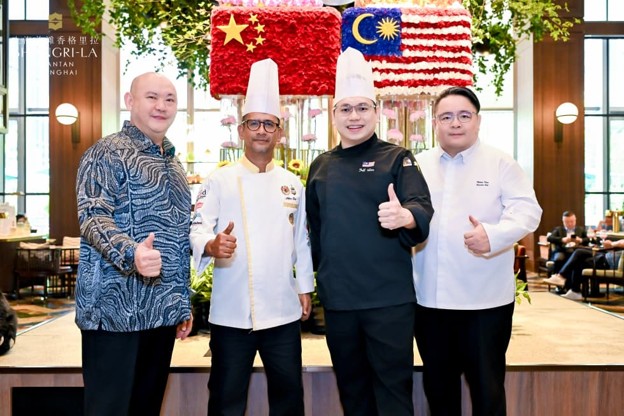
(From left) Dexter Cheng, General Manager, Shangri-La Qiantan Shanghai; Chef Azhar, Guest Chef from Penang; Jeff Lim Chang Wei, Guest Chef and Senior Lecturer, School of Hospitality and Culinary Arts, INTI International College Penang; and Chef Melvin Kong, Executive Chef, Shangri-La Qiantan Shanghai, during Taste of Malaysia: Flavours from Penang.
The Senior Lecturer from the School of Hospitality and Culinary Arts at INTI International College Penang was selected as Guest Chef for Taste of Malaysia: Flavours from Penang, a culinary promotion held from 21 to 31 August 2026 at Shangri-La Qiantan Shanghai, China.
Held in collaboration with Tourism Malaysia, the promotion featured Penang Nasi Kandar and Nyonya dishes during the hotel’s lunch and dinner buffets, giving Shanghai diners a taste of Penang’s culinary traditions.
Representing Penang in Shanghai was something Jeff took seriously.
“Being selected as a Guest Chef for this promotion is both an honour and a meaningful responsibility. I am representing the food culture that I grew up with, the culinary traditions of Penang, and Malaysia’s multicultural identity,” he said.
“To be able to prepare these dishes in Shanghai and introduce them to an international audience is something I am very proud of. It also reminds me that our local food heritage has the potential to travel far beyond Malaysia when we present it with confidence, professionalism and respect for its origins.”
For Jeff, Nyonya cuisine is a particularly good example of Penang’s multicultural food heritage.
“I hope they understand that Penang food is really a story of people, cultures and generations coming together,” he said.
“Nyonya cuisine itself reflects this beautifully. It developed through the interaction of Chinese heritage with Malay ingredients, local spices, cooking techniques and the wider multicultural environment of this region.”
Ingredients such as bunga kantan, kaffir lime leaves, lemongrass, tamarind, coconut and spice pastes contribute to the layered flavours associated with Penang and Nyonya cooking. Jeff believes that introducing them to a new audience should not mean losing the character of the cuisine.
“For me, authenticity begins with respecting the fundamental character of the dish,” he explained.
“Sometimes the best way to introduce unfamiliar food is not to dilute it, but to tell its story.”
Maintaining those flavours in Shanghai was not always straightforward. Some ingredients commonly used in Nyonya cooking were not readily available, requiring careful planning and alternative sourcing.
Working with another culinary team brought a different set of demands. Recipes, preparation methods and expected flavour profiles had to be communicated clearly, while quality had to remain consistent throughout the buffet service.
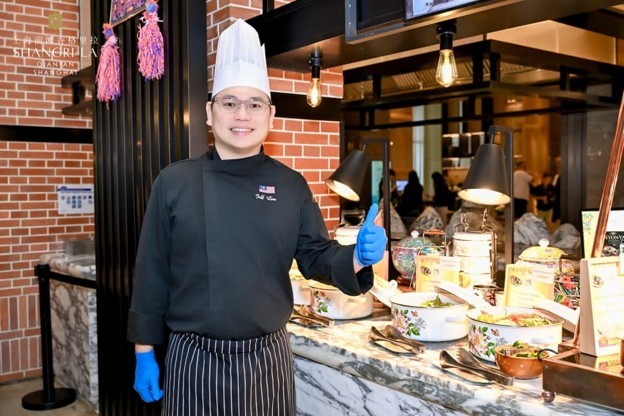
INTI International College Penang Senior Lecturer Jeff Lim Chang Wei prepares Penang and Nyonya dishes during Taste of Malaysia: Flavours from Penang at Shangri-La Qiantan Shanghai, China.
“One of my biggest takeaways is the importance of adaptability, communication and consistency,” Jeff said.
“When working in an international hotel environment, it is not enough to know how to cook a good dish. You need to be able to communicate your recipe and expectations to another culinary team, organise production efficiently, manage large-volume preparation and ensure that the quality remains consistent from one service to another.”
The experience will also find its way into Jeff’s teaching at INTI International College Penang.
“When I return to the classroom, I will not only be teaching concepts from a textbook,” he said.
“I can share real examples of working in an international hotel kitchen, planning for high-volume buffet operations, managing mise en place, sourcing ingredients overseas, communicating recipes to another culinary team and adapting when unexpected challenges occur.”
Jeff hopes the experience will also encourage his students to see where their own culinary careers could take them.
“I hope they see my Shanghai experience and think, ‘If my lecturer can take Penang’s food onto an international stage, perhaps one day I can too.’”
His advice to them is simple.
“Learn globally but know your roots. Your Malaysian identity can be one of your greatest professional strengths.”