Every year, nearly one million people worldwide are diagnosed with stomach cancer, making it one of the most common cancers and a major cause of cancer-related deaths globally. Many patients are diagnosed only after the disease has reached an advanced stage, when treatment becomes more difficult, and survival rates decline.
While surgery and chemotherapy remain standard treatments for stomach cancer, they often come with a difficult trade-off. Chemotherapy attacks rapidly growing cells throughout the body, which means healthy cells may also be affected. Patients can experience fatigue, nausea, hair loss and weakened immunity, while some tumours may gradually become resistant to treatment.
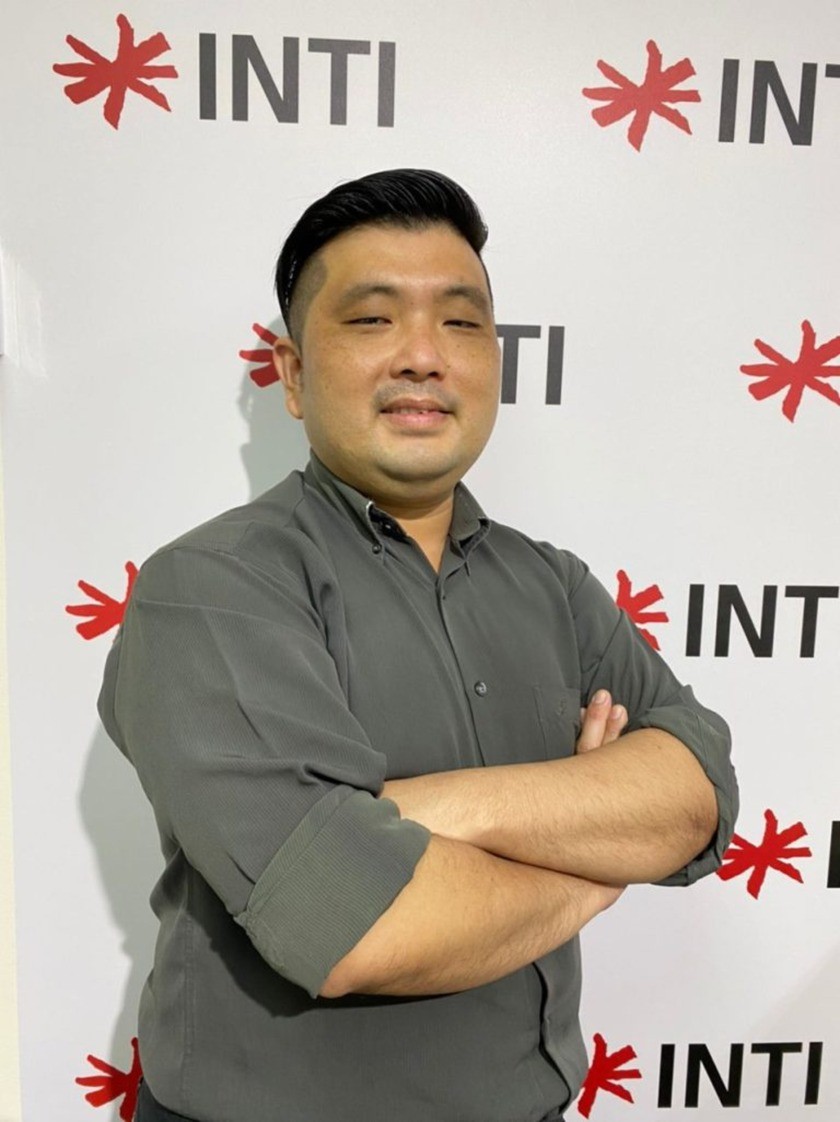
Prof Goh Khang Wen of INTI International University co-authored a review examining how nanomedicine could support more targeted approaches to gastric cancer treatment.
Researchers are therefore looking not only at developing new drugs, but also at improving how existing treatments are delivered.
A review co-authored by Prof Goh Khang Wen of INTI International University examines how nanomedicine could support more targeted approaches to gastric cancer treatment. The paper, “Molecular Targets in Gastric Cancer for Nanomedicine Therapeutics: Mechanistic Insights and Translational Progress”, reviews international advances in molecular targets, nanocarrier technologies and precision medicine for gastric cancer.
The review highlights how engineered nanoparticles could help deliver medicines more selectively to tumour sites, support earlier diagnosis and contribute to more personalised treatment approaches.
Nanomedicine uses engineered nanoparticles that are thousands of times smaller than the width of a human hair. These microscopic carriers, including liposomes, lipid nanoparticles, dendrimers and gold nanoparticles, can be designed to interact with specific molecular features associated with cancer cells. Different types of nanocarriers offer different advantages, including improving drug stability, supporting targeted delivery and assisting cancer imaging.
A simple way to understand the approach is to think of it as a more targeted delivery system. Instead of relying only on medicine circulating widely through the body, nanocarriers are designed to guide treatment closer to the intended site while reducing unnecessary exposure elsewhere.
Prof Goh said this targeted approach is part of the broader movement towards precision oncology.
“Cancer treatment is entering an era of precision medicine, where therapies are increasingly designed around the biology of each patient’s tumour rather than relying on a one-size-fits-all approach,” he said.
“Nanomedicine has the potential to become an important part of this transformation because it enables us to design smarter drug delivery systems that can target cancer cells more selectively, improve therapeutic effectiveness and minimise harm to healthy tissues.”
Rather than focusing on a single experimental treatment, the review analyses findings from studies around the world involving key molecular targets such as HER2, VEGF, MET and immune checkpoints. These biological markers help researchers better understand how nanoparticles may be designed to identify cancer cells more accurately, improve drug absorption and address one of cancer treatment’s major challenges: drug resistance.
The review also explores the role of nanotechnology in cancer diagnosis. Researchers are studying multifunctional nanoparticles that may one day help detect tumours, monitor treatment response and deliver therapy through a single platform. This emerging field, known as theranostics, could support earlier detection and more targeted treatment planning in the future.
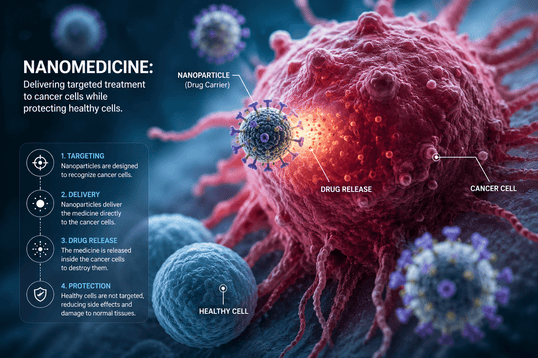
Nanomedicine uses engineered nanoparticles to help deliver medicines more selectively to tumour sites, offering the potential to improve treatment precision while reducing unnecessary exposure to healthy tissues.
Artificial intelligence may further support this progress. By analysing genomic information, biomarkers and tumour characteristics, AI could help researchers identify suitable molecular targets and design more personalised nanomedicine strategies for individual patients.
The review also notes the significance of gastric cancer in Asia, where the disease remains more common than in many Western countries.
Prof Goh emphasised that although nanomedicine has shown strong potential, several scientific, manufacturing and regulatory challenges must still be addressed before these technologies can become part of routine clinical care.
“The progress achieved over the past decade demonstrates enormous potential,” he said.
“Continued collaboration between researchers, clinicians and industry will be essential to translate these innovations into treatments that improve patient outcomes.”
As cancer treatment continues to move towards more personalised approaches, the review highlights how molecular biology, nanotechnology and artificial intelligence could help shape the next generation of gastric cancer care, provided further research can address the scientific, manufacturing and regulatory challenges ahead