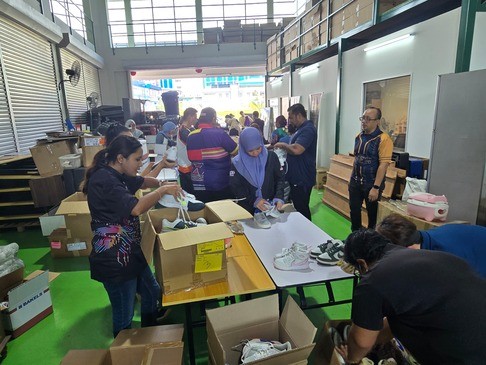
Nearly 40 large boxes of unsold clothing from closed boutiques could have ended up as waste. Instead, they were sorted, labelled, and processed by 28 Doctor of Education (DEd) students from INTI International University as part of a community initiative with Muhibbah Malaysia Foodbank Society, also known as Muhibbah Foodbank.
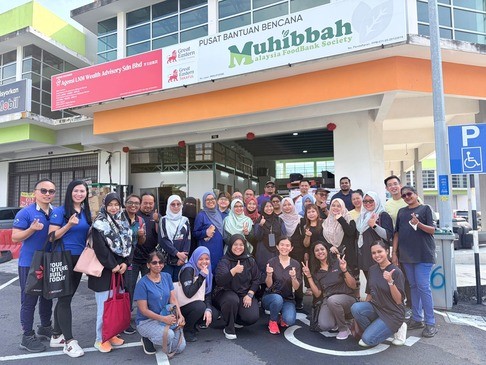
Muhibbah Malaysia Foodbank Society was chosen for this initiative because its work extends beyond food assistance to include resource rescue, community support, volunteer mobilisation, and social outreach.
While food banks are often associated with food collection and distribution, the students saw that community support at Muhibbah Foodbank extends beyond food. The rescued clothing will be redistributed through future community initiatives such as disaster relief, seasonal free markets, and charity fundraising efforts.
According to Dr Rachel Tan Ee Sing, Project Leader for the initiative and INTI Head of Programme, the experience highlighted the importance of preparing educators who understand the communities they serve.
“This is because schools, universities, and educational institutions do not exist in isolation,” said Dr Rachel. “They are part of wider communities and often face similar challenges relating to equality, access, well-being, and social support.”
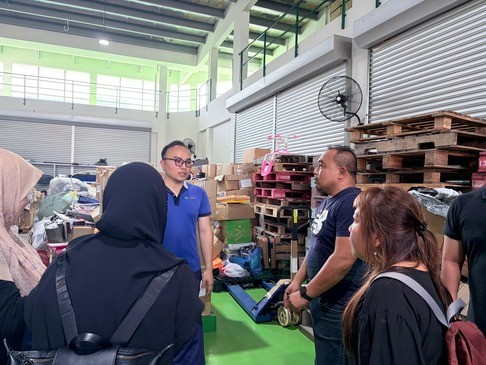
Students listen to a briefing by a Muhibbah Foodbank volunteer before taking part in the clothing sorting initiative.
She said effective leadership requires awareness of social realities, empathy for others, and a willingness to work collaboratively to address community challenges.
“Experiences like this allow students to recognise that educational leadership is not only about managing educational institutions, but also contributing positively to the broader society,” she said.
Beyond sorting the donated items, the students were also exposed to the planning, volunteer coordination, stakeholder engagement, and resource management needed to sustain community support efforts.
Dr Rachel said she was struck by the scale of coordination required behind the scenes.
“The care behind every donated item, sorted box, and distribution effort was a commitment to supporting the dignity and well-being of others,” she said.
The experience reinforced the DEd programme’s commitment to developing socially conscious, community-oriented educational leaders who can connect educational practices to broader societal challenges.
One participant, Khairizah Kamaruddin, said it is important for educators to stay connected with community realities.
“It allows educators to better fulfil their role in promoting both educational success and social wellbeing by allowing them to make more informed decisions and provide meaningful support to their students through inclusive learning environments and building stronger relationships and understanding with families and community organisations,” she said.
Fellow participant Malek Baseri, whose professional experience spans schools in Sarawak and Kuala Lumpur, as well as indigenous community education initiatives, said the experience challenged general assumptions about the difficulties faced by different communities.
Dr Rachel Tan Ee Sing, Project Leader and INTI Head of Programme, said the initiative helped students connect academic concepts with real-world community contexts.
“There is a perception that certain communities are doing well while others require support,” he said. “But the reality is that hardship comes from diverse backgrounds. Organisations like Muhibbah Foodbank help us see beyond those assumptions and recognise the shared responsibility we have to support one another.”
For Kirubashini A/P Nadarajan, another participant and seasoned volunteer, the initiative was a reminder of the importance of active contribution.
“While donations are undoubtedly important, there is something powerful about giving your time, energy, and effort. Being involved personally allows you to connect with people, hear their stories, and understand their challenges in a way that numbers and reports cannot capture,” she said.
INTI’s DEd programme and Muhibbah Foodbank also hope to explore future collaborations in community-based learning, research, service learning, and educational leadership development, while the sorted clothing will be redistributed through Muhibbah Foodbank’s future community initiatives.