Understanding a Malaysian audience, asking the right questions and deciding which details deserve attention remain essential to communications work, even as artificial intelligence (AI) helps professionals produce content faster.

Jazelia Jasmene, an INTI alumna and Copywriter at Hakuhodo Malaysia, discusses the importance of understanding Malaysian audiences when developing advertising, including content produced with AI assistance.
The Industry Advisory Board (IAB) session for Business and Mass Communication at INTI International College Subang on 8 October 2026 discussed these skills. The annual session brought together 47 industry representatives and INTI academics to discuss workplace expectations and how students could be better prepared to meet them.
For Jazelia Jasmene, an INTI alumna and Copywriter at Hakuhodo Malaysia, effective advertising begins with understanding the people a message is intended to reach.
Malaysia’s mix of cultures, religions and lived experiences influences how audiences interpret advertising. She highlighted the importance of recognising these nuances when developing ideas, including when using AI.
“You can try to generate or prompt, but they cannot nail the experience of becoming a human, especially Malaysian,” she said.
Jazelia explained that the quality of AI-assisted work depends on the insight and direction supplied by the person using it. Advertising professionals need to understand both their target audience and the business problems they are trying to solve before deciding what to communicate.
“In advertising, if you’re not speaking to an audience, you’re speaking to no one,” she said.
Her point places audience understanding at the centre of the creative process. Producing content quickly has limited value if the message lacks clear purpose or fails to connect with its intended audience.
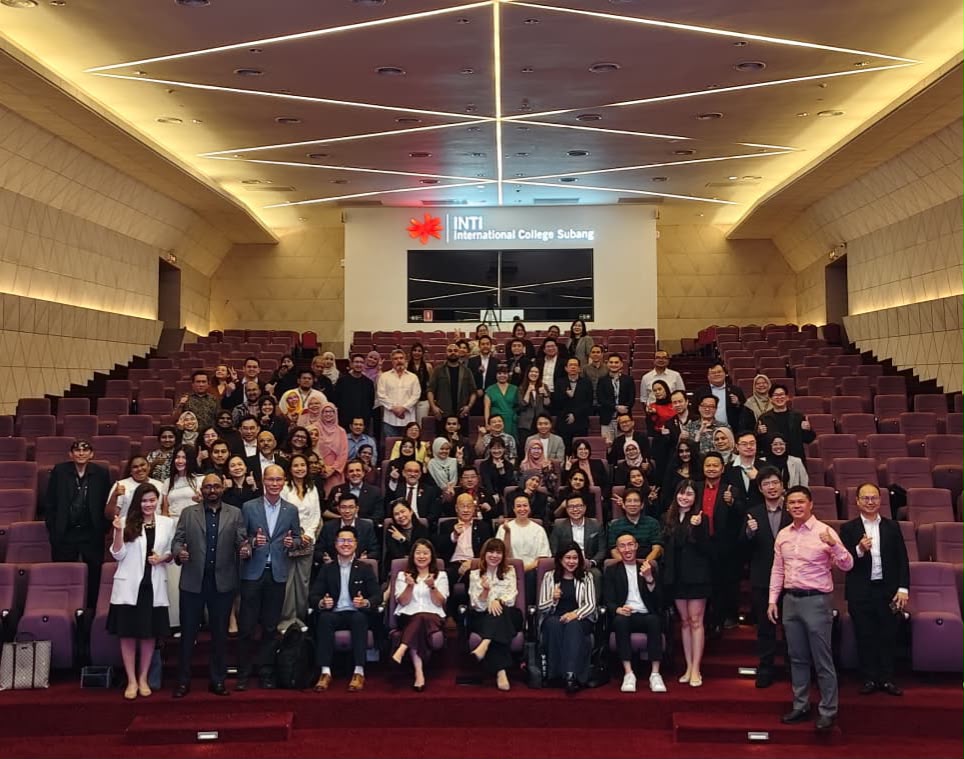
Industry Advisory Board members and INTI representatives gather at the Tan Yew Sing Auditorium, INTI International College Subang, ahead of the Business and Mass Communication discussions on 8 October 2026.
In journalism, Ooi Beng Cheang, Director of Industry Development at Majlis Media Malaysia, drew attention to the work that happens before a story is written: gathering information, interviewing people, and establishing what happened.
He highlighted the value of original reporting in an environment where AI systems can draw on published news to answer questions about developing events. He cautioned that using AI to rework already available information risks producing repetitive material without adding new reporting.
Ooi gave interview transcription as an example of how AI could save journalists time. Once a transcript is available, however, the journalist still needs to assess the material, identify key details, and decide the story’s central angle.
“You need to know what the important parts of that story are to take account of and process that into a story. That, you need human,” he said.
Those decisions require an understanding of the subject and the ability to distinguish important information from details that add little to the story. Journalists must also verify what they have gathered before presenting it to the public.
Ooi noted that the profession demands capabilities across several settings, including interviewing, news gathering, on-camera presentation and live reporting. Responding to a developing situation requires journalists to obtain first-hand information and make decisions as events unfold.
These workplace demands also affect how students learn and are assessed.
Ooi suggested that journalism assignments should examine students’ ability to investigate current issues, interview multiple sources, evaluate information and develop original stories. Writing would remain part of the assessment, alongside the reporting and judgement behind it.
Such assignments would allow students to use AI for support while demonstrating what they had investigated, verified and contributed themselves.
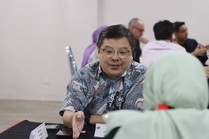
Ooi Beng Cheang, Director of Industry Development at Majlis Media Malaysia, discusses original reporting, verification and editorial judgement as essential capabilities for journalists working with AI tools.
The IAB provides a forum for industry partners and academics to discuss these expectations. Organisations represented on INTI’s Business and Mass Communication IAB also included AstraZeneca Sdn Bhd, OPPO Malaysia, Grab and New Straits Times Press (Malaysia) Berhad.
For students preparing to enter these fields, knowing how to use AI is part of being work-ready. They also need something of their own to contribute: an observation about an audience, a question worth pursuing or information they have gathered and verified.