Artificial intelligence (AI) can help produce engineering designs and quantity calculations. Graduates using those results still need to check their accuracy, recognise possible errors, and decide whether they suit the work at hand.
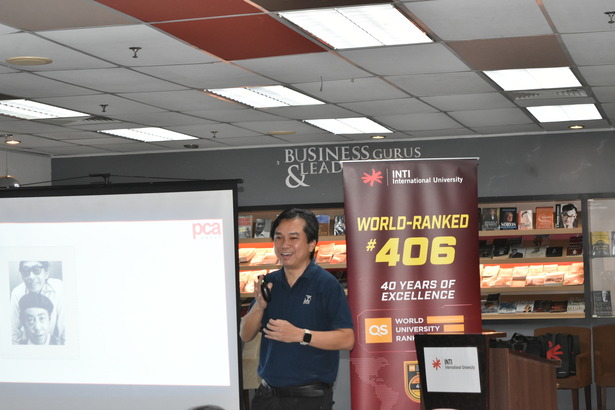
Keynote speaker Mr Chua Sun Fat of PCA Group Sdn Bhd encouraged participants to explore how AI could solve workplace problems and improve productivity.
For students preparing to enter these professions, this means learning to use AI while developing the knowledge and judgement to question its output.
INTI International University’s Industry Advisory Board (IAB) discussed these expectations at its Mechanical Engineering and Quantity Surveying session on 30 October 2026. Held under the theme “Advancing Employability in the Age of AI”, the session brought together 13 industry representatives and 15 academics to discuss the skills graduates need and how their education can prepare them.
Professor Dr Shamsul Nahar Abdullah, Pro Vice-Chancellor of Academic Operations at INTI International University, spoke about the changing expectations facing those entering the workforce.
“As manual labour becomes automated, expectations for fresh graduates are shifting. The core challenge facing entry-level professionals is not job availability, but a widening skills gap,” he said.
Delivering the keynote address, Mr Chua Sun Fat of PCA Group Sdn Bhd encouraged participants to explore how AI could help solve workplace problems. While tools for writing, data analysis and content creation are already familiar to many users, he urged them to consider other ways the technology could improve everyday tasks and productivity.
The engineering discussion showed why applying AI also requires a solid understanding of the work itself. Participants identified uses in design, troubleshooting, maintenance, logistics and automation, but stressed that graduates must be able to check the results against engineering principles.
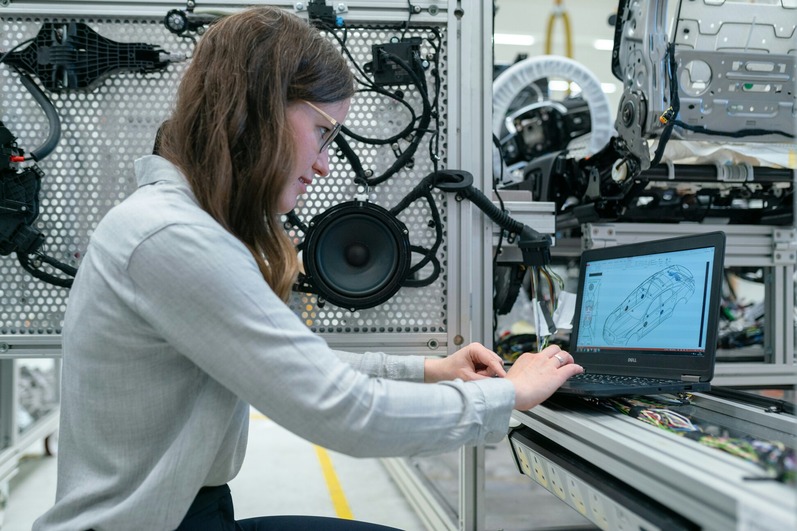
Discussions at the IAB session highlighted how employers can help staff adapt through access to AI tools, training and opportunities to apply new skills.
“Knowing how to use AI is important, but equally important is knowing how to validate and apply the data it produces. Students need to understand how to turn AI-generated information into meaningful outcomes, which is why practical exposure and industry visits are essential,” said Mr Rajasegaran Munion, Regional Business Development Manager, APAC, at LORKING Asia.
Quantity Surveying representatives raised a similar concern. AI can assist with measurement and procurement, but graduates still need to understand the principles, professional practices and ethical responsibilities behind those tasks. Faster calculations help only when the user can assess whether they are appropriate.
This led to discussions about how students should learn to work with AI. Industry representatives suggested introducing relevant tools across existing subjects, allowing students to see how the technology applies to the work they are studying.
Mr Mohd Haizat bin Mohd Zain, Contract Management & Methods Manager at TotalEnergies EP Malaysia, also suggested a subject to build students’ basic understanding of AI in Quantity Surveying.
“We suggest developing a dedicated subject that broadly covers AI in Quantity Surveying, including the fundamentals and prompt writing, to ensure students have a basic understanding of how to use AI,” he said.
Classroom learning would need to be supported by opportunities to experience professional practice. Participants recommended projects, industry-led mentoring, internships, industrial visits and training in AI and professional technologies.
They also suggested short courses and micro-credentials to help students develop specific skills, alongside robotics competitions and design challenges where they could apply their knowledge. Such activities would give students practice in solving problems, explaining their decisions and working with others, as well as a better understanding of what employers expect.
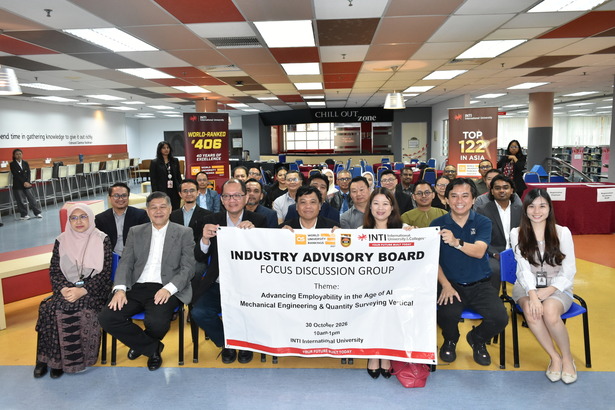
The Mechanical Engineering and Quantity Surveying IAB session brought together 13 industry representatives and 15 academics to discuss the skills graduates need and how universities and employers can help prepare them.
Employers also have a role in helping graduates and existing staff adapt. Mr Chua called for investment in AI tools, infrastructure and employee training, with opportunities for people to apply what they learn. He suggested giving AI competency greater consideration in recruitment and performance evaluations, noting that candidates who could demonstrate its practical use might have an advantage.
“Every company needs to take action and make significant changes to adapt to AI. However, while many organisations recognise the need for change, we do not always see these actions being put into practice. If companies do not evolve, students and graduates will have to rely on their own initiative to develop their AI skills. I believe the first step is for employers, including all of us, to make meaningful changes within our organisations to ensure better adaptability.”