Meet and Greet with International Students in Malaysia 2026 (MAGNET 2026) brought together 1,500 international students from 66 countries at INTI International University, Nilai, on 30 September and 1 October, including students from 20 public universities and more than 50 private higher education institutions.

Meet and Greet with International Students in Malaysia 2026 (MAGNET 2026) brought together 1,500 international students from 66 countries, representing 20 Malaysian public universities and more than 50 private higher education institutions, with the highest participation recorded from Bangladesh, Pakistan, Indonesia, Sudan and China.
Now in its fifth year, MAGNET has been organised annually since 2022 as a Ministry of Higher Education initiative to engage international students studying in Malaysia.
Previously known as the International Student Outreach Programme, it has grown into a platform for students to connect across institutions, experience Malaysia’s culture and communities, and engage directly with the country’s higher education sector.

In his opening remarks for In Person with Doc Zam, Dr Chong Kok Wai, Chief Executive Officer of INTI International University & Colleges, spoke about how international students’ experiences in Malaysia can shape the understanding and connections they carry with them after graduation.
The 2026 edition was significant for another reason. For the first time, MAGNET was organised through a collaboration between a public and private higher education institution, with Universiti Sains Islam Malaysia (USIM) working with INTI International University under the Ministry of Higher Education initiative through the Department of Higher Education. Education Malaysia Global Services (EMGS) and the Negeri Sembilan State Government were also involved in the programme.
Held under the theme “Unity in Diversity: Bridging Cultures, Inspiring Futures”, the two-day programme combined cultural exchange, heritage experiences and direct engagement with higher education leaders.
Dr Chong Kok Wai, Chief Executive Officer of INTI, said choosing to study in another country involves much more than adjusting to a different academic environment.
“Choosing to study in another country is a big decision. Many of you have left familiar surroundings and adjusted to a different way of learning and living,” he said.
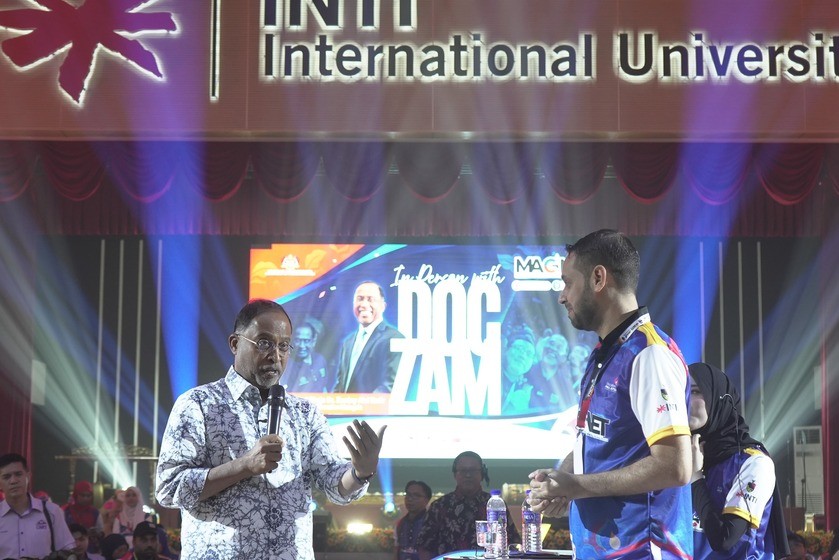
Dato’ Seri Diraja Dr Zambry Abd Kadir, Minister of Higher Education, engages with international students during In Person with Doc Zam, where he spoke about the role of social interaction and cross-cultural experiences in education.
“When your studies are complete, you will leave Malaysia with the qualification you earned. You will also carry your own understanding of this country, shaped by the people you met, the opportunities you received and the experiences you had while living here.”
Students had plenty of opportunities to form those impressions over the two days.
At the country booths, participating universities introduced different countries and cultures, giving students the chance to learn from one another. Traditional games including Dam Harimau, Batu Seremban, Coconut Bowling, Congkak and Sepak Raga Bulatan encouraged participation, while cultural performances, a Malay-language song competition and International Cultural Night brought students together in a different setting.
The Negeri Sembilan Heritage Trail took the experience outside the campus, introducing participants to the state’s local heritage and communities.
Another shared moment came through the University Inclusivity Pledge, which brought students of different nationalities together in a commitment to respect, inclusivity, understanding and unity. The programme earned Malaysia Book of Records recognition for the highest number of nationalities united in a university inclusivity pledge.
The Department of Higher Education, in collaboration with INTI International University and USIM, was named as the record holder.
During the official launch, Ts. Dr Noraisah binti Spahat, Deputy Director-General of Higher Education, spoke about the role experiences outside formal teaching can play in students’ education.
“Education does not take place only inside the classroom. We learn through people, cultures and communities. We learn through places and experiences,” she said.
She also highlighted the collaboration between USIM and INTI as an example of how public and private higher education institutions can work together to strengthen Malaysia’s internationalisation efforts.
For INTI, its involvement extended beyond hosting the programme at its Nilai campus. As the first private higher education institution to take on an organising role in MAGNET, INTI worked alongside USIM to bring students from institutions across Malaysia together. At the same time, its collaboration with the Negeri Sembilan State Government connected the programme to the state’s heritage through the Heritage Trail.
MAGNET was also designed to give international students a more direct connection with those shaping higher education in Malaysia.
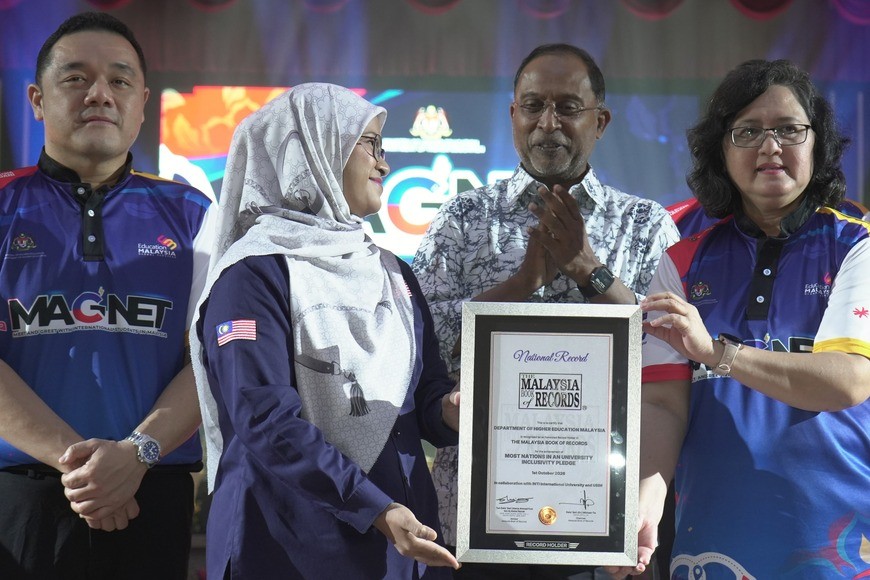
Students from 30 nationalities united in the University Inclusivity Pledge, earning Malaysia Book of Records recognition for the highest number of nationalities in a university inclusivity pledge. The record was jointly held by the Department of Higher Education, INTI International University and USIM.
During In Person with Doc Zam, students took part in a sharing session, dialogue and Q&A with Dato’ Seri Diraja Dr Zambry Abd Kadir, Minister of Higher Education. The discussion ranged from the purpose of international education to issues affecting students, including internationalisation, artificial intelligence, entrepreneurship, visa matters and student welfare.
“Part of education is actually socialisation. You need to know each other,” he said.
Dato’ Seri Diraja Dr Zambry pointed to Malaysia’s multicultural environment as part of what students encounter when they choose to live and study here.
“When you come to Malaysia, you are actually coming to live at a very interesting intersection, where you find people of different religions, different cultures, different languages, and furthermore, different civilisations,” he said.

A vibrant cultural performance at one of MAGNET 2026’s country booths gives international students an opportunity to share their heritage with fellow participants, bringing different cultures to life through music, movement and expression.
The session also gave students a route to raise practical concerns. The Minister encouraged international students facing issues related to their studies, visas or welfare to bring them through their institutions so they could be escalated to the Ministry where necessary.
His discussion with the students went further than their immediate experience in Malaysia. Dato’ Seri Diraja Dr Zambry challenged them to think about education beyond what he described as “transactional education” and to consider how their knowledge and experiences could eventually benefit their own communities and countries.
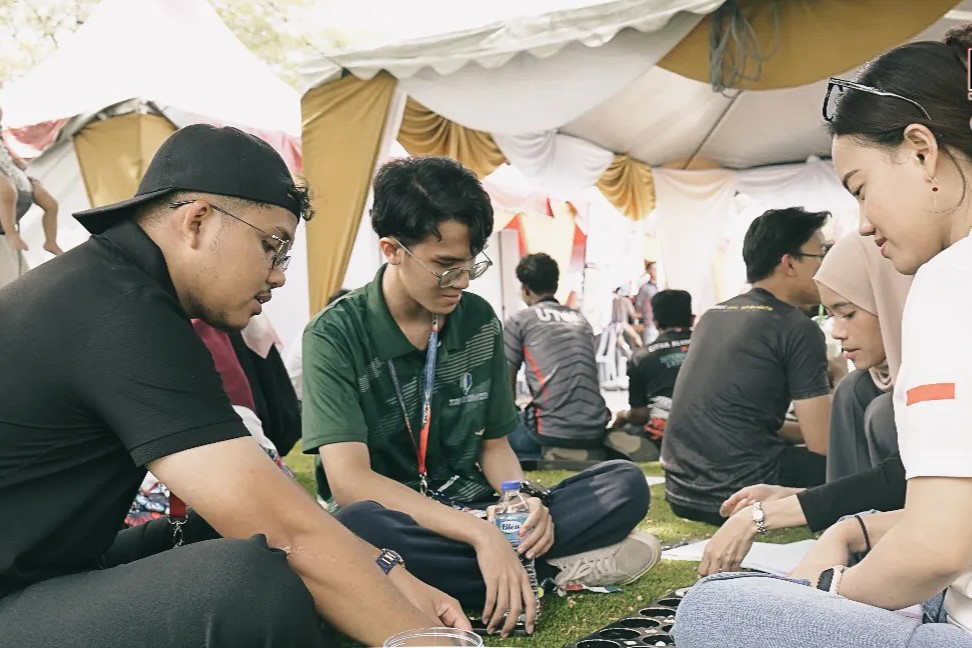
Through a game of congkak, international students get a hands-on introduction to one of Malaysia’s traditional pastimes, turning cultural exchange into an engaging and shared experience.
“Most importantly, what can they do for their country?” he said.
That exchange captured an important part of what MAGNET has developed into over five editions. Culture and heritage gave students a way to experience Malaysia, but the programme also created space for them to meet peers outside their own institutions, speak with higher education leaders, and consider what studying in another country can add to how they see their place in the world.
For the 1,500 students who came together at INTI, those conversations happened alongside the games, performances, country booths and heritage experiences that made Malaysia the common ground between them