Cleaner electricity for homes and equipment that uses less energy at work are among the changes climate funding can support. But committing more money does not automatically show whether carbon emissions are falling.

Dr Ammar Asbi of INTI International University’s Faculty of Business and Communications co-authored a study examining the relationship between climate financing and carbon dioxide emissions in 74 developing countries.
A study co-authored by Dr Ammar Asbi of INTI International University’s Faculty of Business and Communications examines that relationship across developing countries, raising questions about how climate investments are directed and how their results are measured.
Climate funding is money used to reduce emissions or help communities cope with climate risks. The study examines its relationship with carbon dioxide, a gas that contributes to global warming, so reducing its release is an important part of efforts to address climate change.
The researchers analysed data from 74 developing countries between 2015 and 2021. They measured emissions per person by dividing a country’s emissions by its population and considered other factors, including income, population growth, and forest cover.
Their analysis found that higher funding for projects intended to reduce emissions was linked with higher carbon dioxide emissions per person. This does not prove that the funding caused emissions to rise. The country-level findings also do not establish whether particular projects succeeded or failed.
“The findings suggest that increasing climate finance alone may not be sufficient to reduce carbon emissions. What matters is how the funding is allocated, the types of projects being supported and whether those investments can deliver meaningful reductions over time,” Dr Ammar said.
The researchers offer one possible explanation for the finding. Some funding supports infrastructure upgrades or improvements in industries that still depend on fossil fuels, such as coal, oil and gas. Although these investments aim to support a cleaner energy system, their early stages may still involve higher emissions.
Developing countries must also meet demand for electricity, industrial activity and infrastructure while making that transition. The challenge is to find cleaner ways to meet those needs and assess whether investments are producing the intended benefits over time.
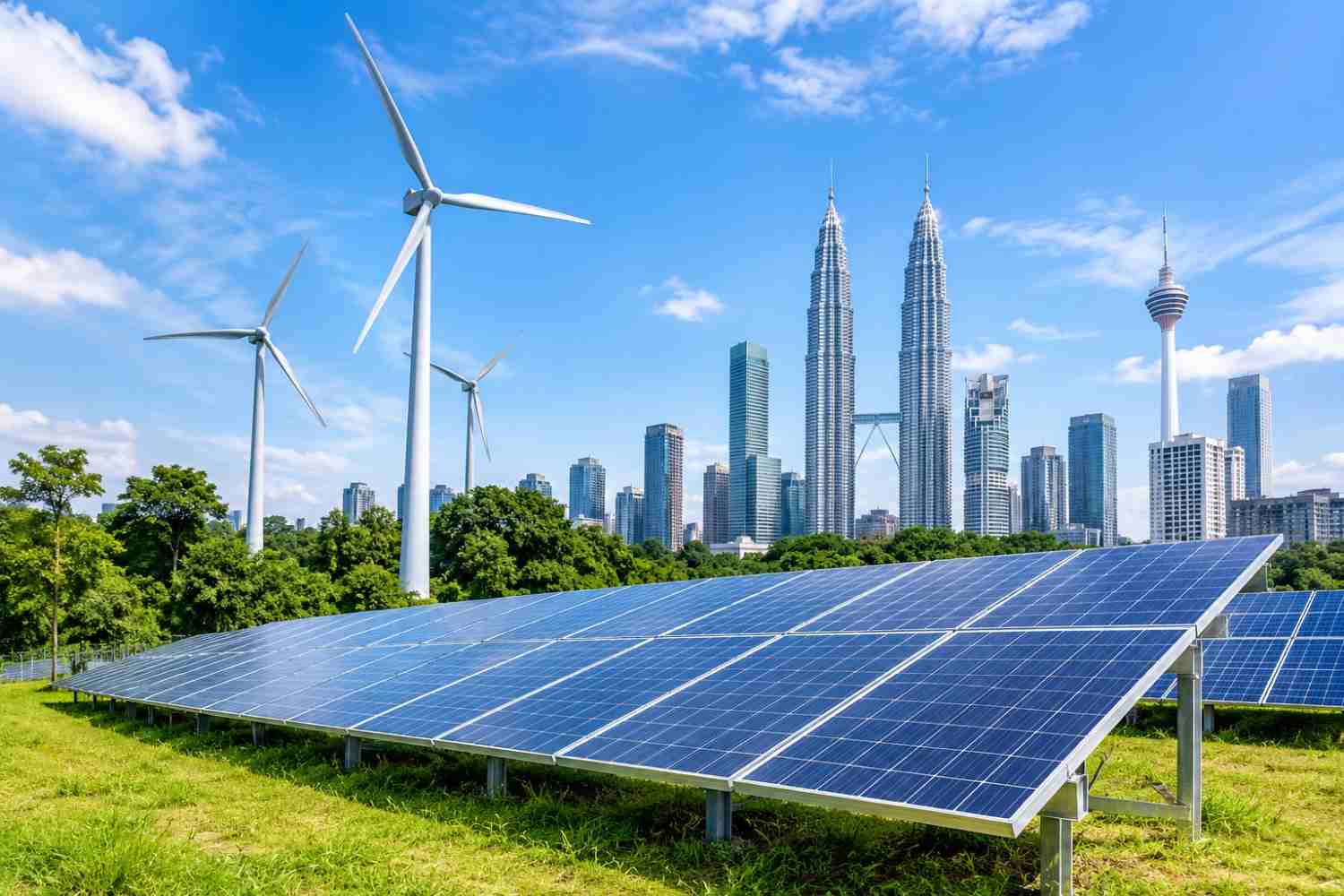
Investment in renewable energy and projects to reduce carbon emissions needs to be assessed through measurable results over time.
The study also found that higher income per person and greater forest cover were linked with lower emissions, while population growth was linked with higher emissions. The findings suggest that funding needs to work alongside policies addressing economic development, forest conservation and growing demand for energy and infrastructure.
The paper, “Does Climate Finance Matter? The Relationship between Climate Finance and Carbon Dioxide Emissions in Developing Countries”, was published in the International Journal of Energy Economics and Policy in 2025. Dr Ammar co-authored it with Dr Kelvin Lee Yong Ming, Dr Nik Herda Nik Abdullah, Dr Amira Mas Ayu Amir Mustafa and Dr Siti Nurul Munawwarah Roslan, with affiliations to Taylor’s University and INTI International University.
How to judge climate investment matters as Malaysia continues its shift toward cleaner energy. Under Budget 2027, RM1 billion through KWAP’s Dana Iklim+ was identified for green projects, including renewable energy and decarbonisation, or reducing carbon emissions. The study did not assess this fund.
Malaysia also faces the challenge of helping communities cope with environmental risks. The Department of Statistics Malaysia recorded RM636.9 million in flood-related losses in 2025, including RM183.8 million in damage to living quarters. These figures show the scale of damage to homes, but they are separate from the study’s findings about emissions-reduction funding.
The distinction matters when judging results. A project intended to reduce emissions should be assessed against that objective, while measures intended to protect communities need to be evaluated against the risks they address.
“Funding for renewable energy, energy efficiency and low-carbon technologies needs to be accompanied by effective policies and proper monitoring. We must look beyond the amount of money committed and assess whether these investments are helping to reduce emissions in the long term,” Dr Ammar said.