A student recalling the cash contests once familiar on radio asked Prem Shanker whether stations still gave away money. The HITZ Astro Radio presenter paused to consider the question before sharing a debate his team had faced about attracting listeners.
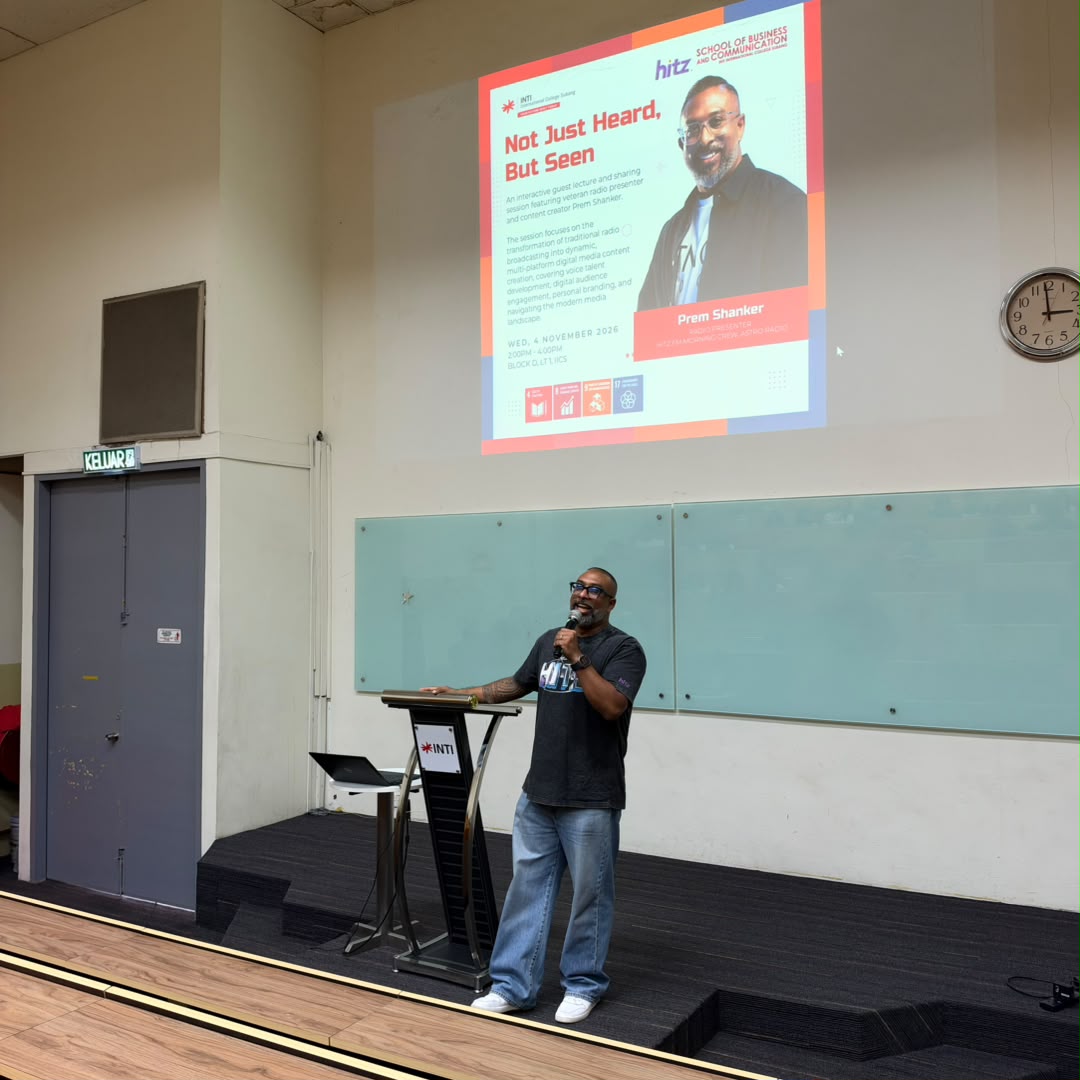
HITZ presenter Prem Shanker draws on 22 years of radio experience to share his approach to content and audience engagement during a guest lecture at INTI International College Subang.
“We debated about it – whether to just give out money to increase listeners or make better content,” he said. “In our radio station, we simply chose to make better content. Better content supersedes money.”
The exchange took place during an academic guest lecture titled “Not Just Heard, But Seen” at INTI International College Subang on 4 November 2026. Mass Communication students from the School of Business & Communication took part in an interactive question-and-answer session with Prem, a Malaysian radio presenter and content creator with 22 years of radio experience.
His accounts gave students a closer look at the realities of broadcasting, from preparing short conversations to deciding how a programme should reach people who consume much of their content online.
Radio has been a familiar part of everyday life for decades, but listeners now have updates, entertainment and conversations available on their phones throughout the day. Broadcasters must give audiences a reason to tune in when information and competing content are already within reach.
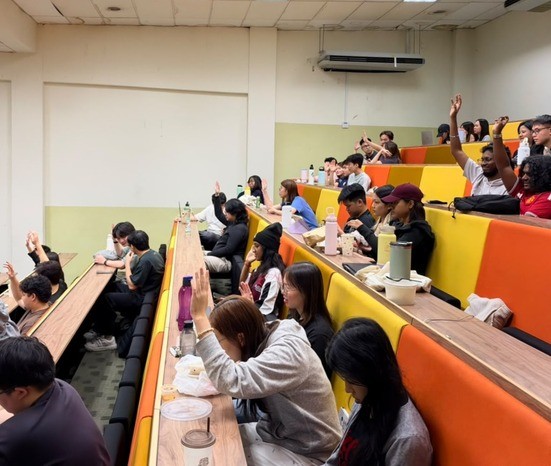
Mass Communication students ask Prem Shanker about broadcasting, content creation and working in an increasingly digital media industry.
“Radios don’t compete with other radios anymore; we compete with social media,” Prem shared.
With content creators and social media users constantly sharing current issues and emerging trends, presenters can no longer take being first with information for granted. They need to understand what their listeners already know and find an interesting way to approach it.
Prem described how this shapes his work on HITZ Morning Crew, a weekday morning programme. He explained that the show combines music with talk segments lasting no more than two minutes and 30 seconds after every 10 songs. Topics are selected to complement its focus on pop music and lighter conversations for a younger, predominantly Gen Z audience.
Those brief conversations require preparation. Presenters research current issues, follow internet trends and consider which topics might work on air. They must then decide how to bring something fresh to the discussion within the time available, without disrupting the listening experience.
“My show starts as early as 6 in the morning, but before that, there might be things happening in Malaysia or the world that people have read about on social media,” he shared. “If we were to just talk about that as a report, that would be boring!”
He also described the team’s approach to content around The Weeknd’s two-day Kuala Lumpur concert. The angle explored what a visit to the city might look like for the international music star, while introducing Kuala Lumpur’s attractions to fans travelling to attend the shows.
The example connected interest in the artist with local experiences. It offered an opportunity to showcase the city through a subject those visitors already cared about, extending the conversation past the performances themselves.
Prem explained that the team’s conversations also reach audiences through video. The station records its broadcasts before passing footage to video editors, who select exchanges and cut them into shorter clips for social media. What begins as an on-air discussion can reach people who did not hear the original programme.
This connection between broadcasting and visual content gave the lecture’s title practical meaning. Students heard how material developed for a radio audience could be adapted for people encountering it on another platform, at a different time.
Working across these formats still requires an understanding of the people listening or watching. Prem spoke about keeping up with younger audiences’ interests, humour and ways of communicating. At 43, he does not necessarily share their generational experiences, but remaining curious about what matters to them is part of his work.
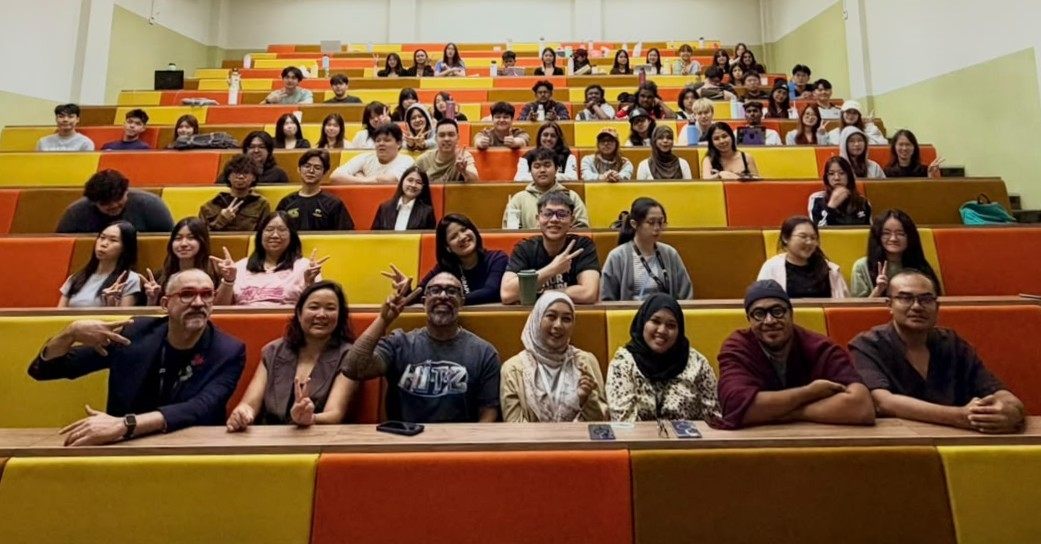
Prem Shanker poses with Mass Communication students and lecturers from the School of Business & Communication at INTI International College Subang.
That effort involves knowing a trend and understanding why people care about it. Passion, creativity and emotional connection also remain important in broadcasting. A presenter brings personality to a discussion, helping a familiar topic feel like a conversation with the audience. The choice of subject is therefore closely connected with how it is presented and whether listeners find a reason to engage with it.
For students considering careers in media, the session connected familiar radio programmes with the research and decisions behind them. Their questions opened up discussions about content, audience expectations and the choices a broadcasting team makes, from weighing cash incentives to finding an angle for a short morning segment.