For people living with psoriasis, treatment is rarely simple. The condition can cause red, itchy, and scaly patches on the skin, with flare-ups that may be painful, uncomfortable, and difficult to manage over time.

Psoriasis can cause red, itchy, and scaly patches on the skin, making long-term treatment and symptom management important for patients
In more severe cases, psoriasis can affect sleep, work, social interactions, self-confidence, and mental wellbeing. It is also associated with other health issues, including psoriatic arthritis, cardiovascular disease, and metabolic disorders, making effective long-term management especially important.
Although treatments such as creams, tablets, and injections are available, they do not work the same way for everyone. Some need to be applied frequently, while others may cause side effects or require ongoing medical monitoring. For patients, this can make treatment difficult to sustain.
This is why researchers continue to look for treatment approaches that are not only effective, but also easier and more comfortable for patients to use. One area attracting attention is microneedle technology.

A scientific review co-authored by Prof Dr Goh Khang Wen of INTI International University explored how microneedle patches could improve targeted drug delivery for psoriasis treatment.
A recent scientific review, co-authored by Prof Dr Goh Khang Wen, Pro Vice-Chancellor, Global Engagement, at INTI International University, together with researchers from several collaborating institutions, explored how microneedle technology could improve psoriasis treatment.
Microneedles are extremely small needles arranged on a patch. Unlike traditional injections, they are designed to penetrate only the outer layers of the skin, creating tiny channels that allow medication to reach affected areas more effectively while causing minimal discomfort.
According to Prof Goh, one of the biggest challenges in treating skin conditions is getting medication through the skin’s natural protective barrier.
“The outermost layer of the skin is designed to protect the body from external substances. While this is beneficial from a biological perspective, it can also make it difficult for medications to reach the areas where they are needed most,” he said.
This barrier becomes especially relevant in psoriasis, where the skin can thicken and become more inflamed. In such cases, some topical treatments may struggle to penetrate deeply enough to achieve the desired effect.
Microneedle patches are being studied as a possible way to address this challenge. By helping medication pass through the skin barrier and reach the affected area more directly, the patches may allow treatment to work more efficiently while limiting exposure to the rest of the body.
This targeted approach could help bridge the gap between topical treatments and systemic therapies. Creams and ointments are often used as a first-line treatment, but they may need to be applied repeatedly and can be inconvenient when large areas of skin are affected. Oral medications and injectable biologic therapies may provide stronger treatment effects, but they can also involve systemic side effects, medical monitoring, or concerns about discomfort.
For patients, these practical concerns matter. Comfort and convenience can influence whether a person consistently follows a treatment plan, especially when managing a chronic condition over many years.
“Patient experience should never be overlooked when developing new healthcare technologies,” Prof Goh explained. “Even the most effective treatment can have limited impact if patients find it difficult to use. Innovations such as microneedle patches have the potential to make treatment more accessible, comfortable and user-friendly.”
Improving treatment adherence is an important part of psoriasis care. Some patients may discontinue prescribed therapies or use them inconsistently due to inconvenience, discomfort, or concerns about side effects. Technologies that simplify treatment routines may therefore support both patient satisfaction and better clinical outcomes.
While microneedle technology is still being studied, and more clinical trials are needed before it becomes widely available for psoriasis treatment, researchers are optimistic about its future. Beyond psoriasis, microneedles are also being investigated for vaccine delivery and the treatment of other skin and chronic health conditions.
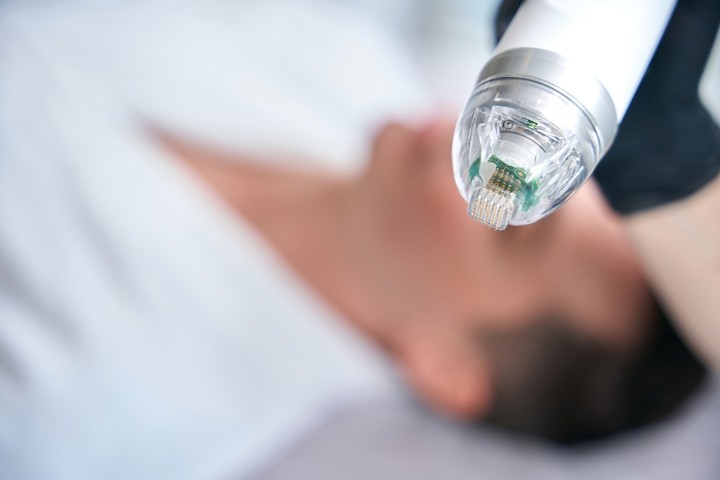
Microneedle patches are being studied as a potential means of delivering medication across the skin barrier with minimal discomfort.
“Ultimately, the goal of medical innovation is to improve people’s lives,” Prof Goh said.
As research continues, tiny patches no larger than a plaster could one day offer people with psoriasis a simpler and more targeted way to manage their condition. While significant research and regulatory work still lie ahead, the technology shows how small advances in drug delivery may help shape the future of chronic skin disease treatment.