A family surname has long symbolised heritage and identity. In today’s celebrity and influencer economy, however, it can also become a shared brand that stretches across industries, from fashion and sports to beauty and media.
A recent study by Mohd Firdaus bin Zainolabidin, Fatin Alia binti Shahar, and Nor Afidah Azmi from the School of Business at INTI International College Penang examines what happens when a family name evolves into a collective commercial identity rather than remaining purely personal. Published in January 2026 in the International Journal of Research and Innovation in Social Science, the study introduces the concept of the “Branded Dynasty Paradox” to describe the tension between protecting a shared family brand and allowing individual members to pursue their own ambitions.
“What we are observing is not simply celebrity branding, but the emergence of family brands functioning as economic systems,” said Mohd Firdaus. “When a surname becomes a shared commercial asset, individual decisions are no longer purely personal. They carry financial and reputational consequences for the entire family unit. That structural tension is what we define as the Branded Dynasty Paradox.”

: (From left) Fatin Alia binti Shahar, Nor Afidah Azmi, and Mohd Firdaus bin Zainolabidin from the School of Business at INTI International College Penang, whose recent study examines governance and identity dynamics within celebrity and influencer family brands.
Globally, families such as David Beckham and the Kardashian-Jenner family have shown how a surname can grow into a commercially valuable platform. In these cases, the family name is no longer just an identity marker, but a shared economic resource that shapes endorsements, partnerships, and long-term brand value.
Unlike corporations, celebrity families rarely operate with formal boards, written brand policies, or structured governance frameworks. Yet their public exposure can rival that of publicly listed companies. In practical terms, the actions of one family member can affect the commercial standing of the entire brand.
Nor Afidah explained that this imbalance creates a governance gap, as the researchers describe it. “There are no formal charters guiding decisions, yet the brand impact is significant and immediate. When one member faces criticism or controversy, the consequences often extend across the entire family enterprise.”
To clarify how these dynamics unfold, the research team developed a framework known as the Dynasty Control versus Member Autonomy Matrix. The model shows how individuals within a family brand balance alignment with collective expectations while building their own identity. The case of Brooklyn Beckham illustrates how efforts to differentiate oneself are often interpreted through the lens of inherited legacy.
The study also highlights how social media intensifies these pressures. Digital platforms enable individuals to promote their personal ventures directly to their followers. At the same time, algorithms and media narratives continue to link them to their family name. Increased visibility brings opportunity, but it also brings scrutiny.
While these patterns are often associated with global celebrity families, similar developments are emerging in Malaysia’s growing digital economy. Influencer-led ventures are increasingly evolving into family-based enterprises, with siblings, spouses, and extended relatives operating under a shared public identity. As these businesses move beyond individual branding into collective enterprises, questions around shared reputation and decision-making become more pressing. Public figures such as Neelofa demonstrate how a strong personal brand can expand into a broader commercial ecosystem shaped by family association and trust.
Fatin Alia noted that the implications are particularly relevant in Malaysia. “In collectivist societies, family reputation is deeply embedded in social identity. As influencer-led businesses expand into family enterprises, the ability to balance unity with individual aspiration will determine whether these brands remain resilient across generations.”
In such contexts, generational transition often becomes the most sensitive phase. Younger members may seek independence and creative freedom, while the wider family works to preserve legacy and brand continuity. What may appear to the public as personal disagreement can reflect deeper structural challenges within a shared commercial identity.
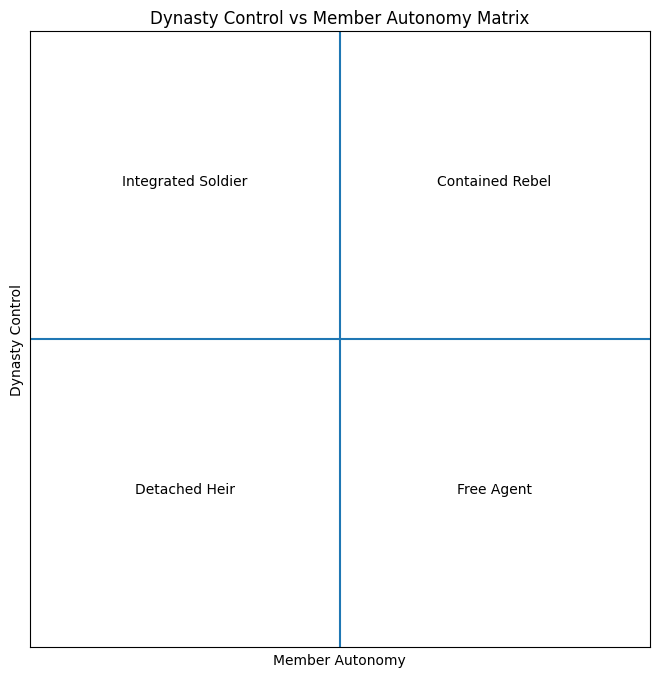
: The Dynasty Control versus Member Autonomy Matrix, developed by researchers at INTI International College Penang, outlines how individuals within celebrity families balance collective brand expectations with personal identity.
The researchers conclude that tensions within celebrity or influencer families should not be dismissed as mere drama. They reflect broader questions about brand governance, reputation management, and identity in an era where personal visibility is closely tied to economic opportunity. The study contributes to ongoing discussions in business and entrepreneurship on managing family enterprises and brand strategy in the digital economy.
As more Malaysian creators and entrepreneurs build family-linked brands, the ability to manage shared reputation while allowing space for individual growth will be critical for long-term sustainability.