A video appearing to show a national leader announcing financial assistance may seem credible because the face and voice are familiar. But if the announcement is fabricated, it could lead viewers into a scam that puts their money or personal information at risk.

Dr Mohd Haizra Hashim of INTI International University’s Faculty of Business and Communication examines the ethical responsibilities surrounding AI-generated political content.
A research paper co-authored by Dr Mohd Haizra Hashim of INTI International University’s Faculty of Business and Communication examines the ethical responsibilities of those who create and distribute AI-generated political content.
Titled The Ethics of AI-Generated Political Content: Truthfulness, Transparency, and Human Responsibility in Political Communication, the paper was published in the International Journal of Research Publication and Reviews in July 2026. His co-author, Wang Haojing, is also from the university’s Faculty of Business and Communication.
The issue is particularly relevant in Malaysia. In February 2026, the Ministry of Finance dismissed false claims about Ramadan assistance and e-Tunai credit, including a fabricated poster featuring Prime Minister Datuk Seri Anwar Ibrahim that advertised a one-off RM500 payment.
The following month, manipulated videos featuring the Prime Minister and Malaysian royals circulated online to promote a supposed Ramadan assistance programme. A fact check by Agence France-Presse identified AI manipulation and found that offers directed people to operators who requested personal information and registration fees.
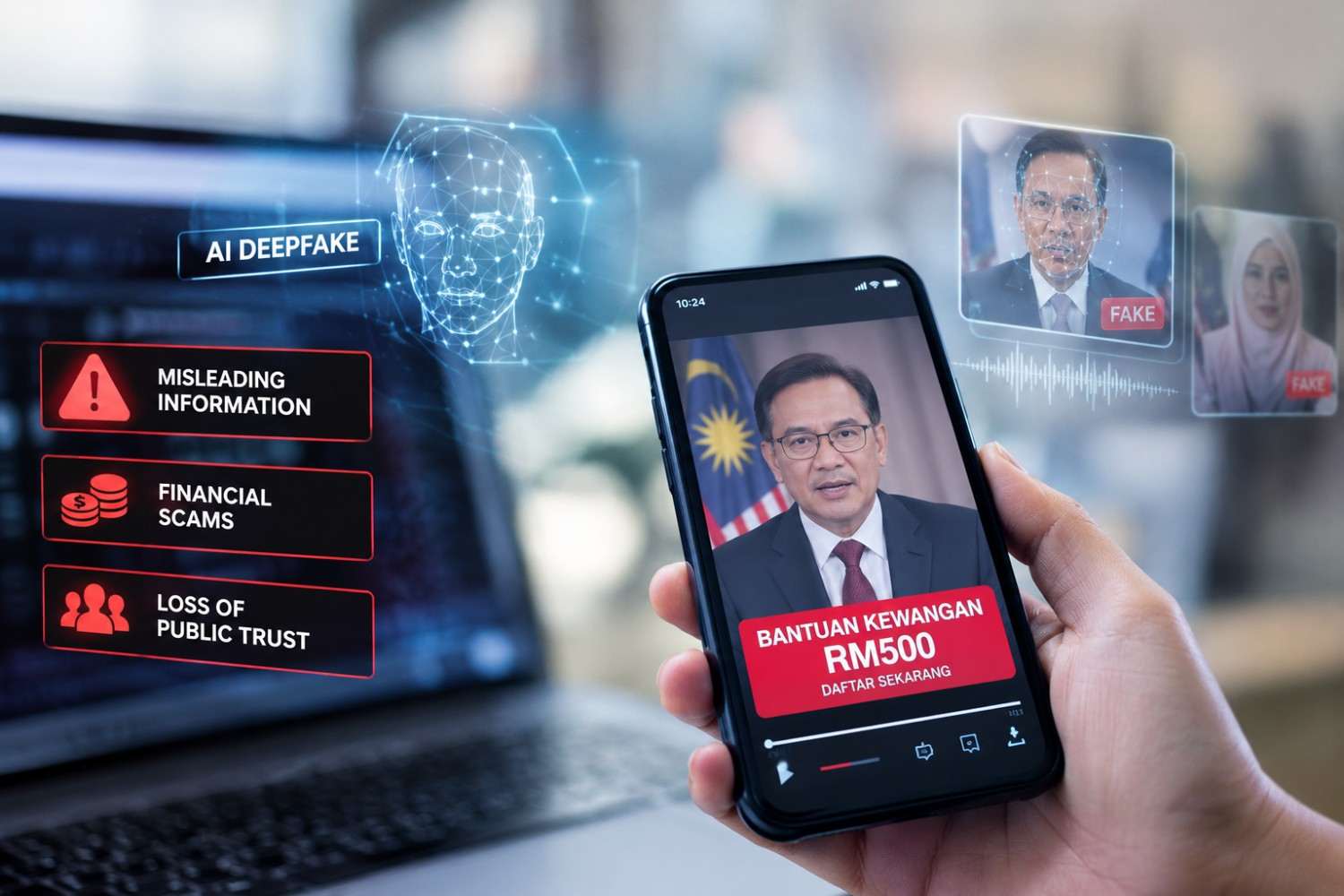
AI-generated videos and cloned voices can make fabricated messages appear authentic, raising concerns about misinformation, financial scams, and public trust.
“The danger is not simply that AI can create convincing fake videos or imitate a person’s voice. It is that people may trust what they see and hear without questioning its authenticity,” Dr Haizra said.
The paper examines international examples, including an AI-generated automated call impersonating former US President Joe Biden during the 2024 New Hampshire presidential primary, and deepfake content involving Keir Starmer and Prince William in cryptocurrency scams. These cases show how impersonation can serve different purposes, from influencing voters to promoting fraudulent investments.
Using deontological ethics and social responsibility theory, the authors examine the duties of those who produce and distribute political messages. They highlight truthfulness, transparency and accountability, arguing that responsibility extends beyond content creators to digital platforms and people who share potentially misleading material.
The paper also discusses Meta’s policies on disclosing AI-generated political advertisements. Dr Haizra said clear disclosure matters most when manipulated content concerns political leaders, public policy, and matters of public interest, so audiences can recognise when someone’s words or actions have been artificially created or altered.
Viewers also help limit the spread of misleading messages. Before responding to or sharing an announcement, Dr Haizra recommends checking it through official government websites, verified institutional accounts and credible news organisations.
Treat requests for registration fees, personal information, or urgent payments with caution, especially when they arrive through unfamiliar links or unsolicited messages.
“AI is not inherently harmful. It can support communication and creativity, but it should not become an excuse to avoid human responsibility,” he said.