A student can understand grammar, know the vocabulary and pass an English examination, yet hesitate when using the language in everyday conversation. Ordering coffee or asking for directions requires practice in listening and responding, as well as the confidence to try.

Dr Kumutha Raman, Lecturer at the Faculty of Education and Liberal Arts at INTI International University, explores how virtual reality can support English speaking practice and communication skills.
Dr Kumutha Raman, Lecturer at the Faculty of Education and Liberal Arts at INTI International University, is exploring how virtual reality (VR) can give students more opportunities to develop these skills. Her interest grew from more than 12 years of experience teaching English at the secondary school level.
“Students may be able to perform well in written examinations, but when it comes to speaking, they may hesitate because they are afraid of making mistakes or being judged,” she explained.
VR language-learning platforms offer students a space to practise conversations in simulated settings. They can listen, respond, and repeat, working through mistakes without the immediate pressure of speaking in front of a class.
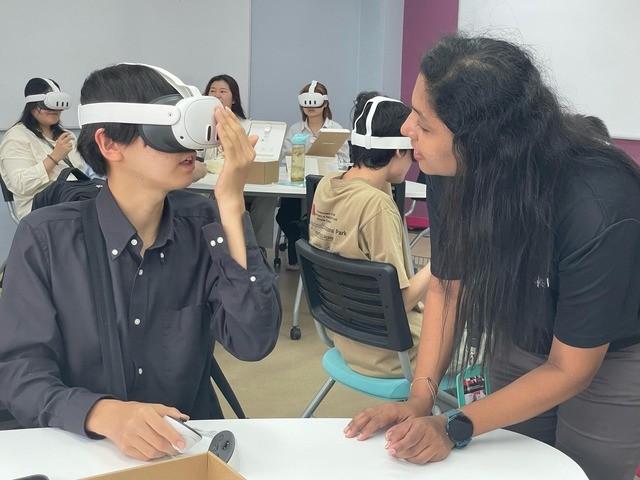
Dr Kumutha Raman (left) assists a student from INTI’s Intensive English Programme in using a virtual reality headset during an English language learning session.
In a 2023 study, Dr Kumutha and her fellow researchers examined the experiences of 166 secondary school students using VR in English lessons. Students reported high levels of engagement and motivation, along with positive views about taking greater responsibility for their learning.
While these responses offer insight into students’ experiences, a 2024 study examined speaking performance among 15 Form 6 students at a Malaysian Chinese independent high school. Over eight weeks, the students used the ImmerseMe platform to practise situations such as checking into a hotel, ordering coffee and reporting a stolen item.
The activities gave students a reason to use English, helping them connect words and expressions with situations they might encounter. Pre- and post-programme assessments showed a statistically significant improvement in the group’s overall speaking performance, with 13 of the 15 students showing improvement.
The findings are encouraging, although the small group and single-school setting limit how widely the results can be applied. Further research with larger groups in different settings would help establish whether similar improvements can be achieved more widely.
Dr Kumutha also observed changes in students’ willingness to participate.
“Some students were nervous at first, but over time, they became more willing to speak, repeat their responses and improve. That willingness to try is important because language learning requires practice.”
Her more recent work at INTI extends the research to 30 students from the Intensive English Programme. It compares conventional English lessons with VR-supported learning using Meta Quest 3 headsets and ImmerseMe, examining the approach in a university language-learning setting.
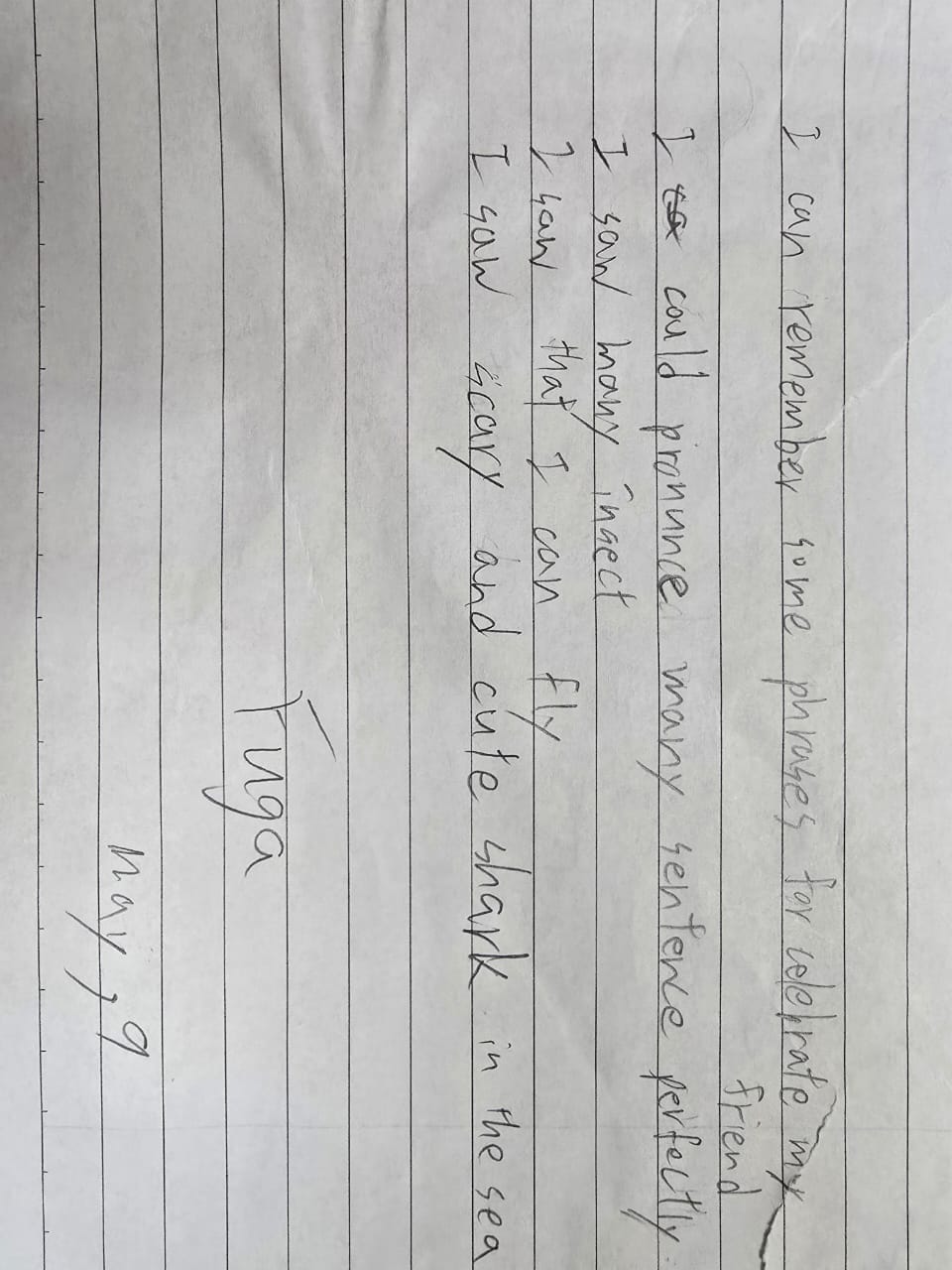
A student from INTI’s Intensive English Programme shares vocabulary and discoveries from their virtual reality learning experience while practising spoken English.
She is also preparing a book on using VR to develop speaking skills among learners of English as a Second Language, bringing together research insights and practical teaching strategies for working with different learners.
To better tailor language practice to individual learners, Dr Kumutha is interested in combining VR with artificial intelligence. AI-powered characters could potentially adjust conversations to students’ English proficiency and provide feedback on pronunciation, vocabulary and fluency. Such tools would need safeguards to protect students’ data.
Using immersive technology in classrooms also requires an understanding of its practical challenges. Dr Kumutha explored these in a 2026 book chapter, Sustainable Education with Metaverse-Based Language Teaching, co-authored with fellow INTI lecturer Nur Izzati Khairuddin and Wong Wei Lun.
The authors reviewed 25 studies published between 2020 and 2025 to examine the opportunities and challenges of using virtual environments to support language learning. The review identified potential benefits for engagement, motivation and collaboration, but found that results for oral proficiency varied. It also highlighted concerns about unequal access to technology, privacy and cybersecurity.
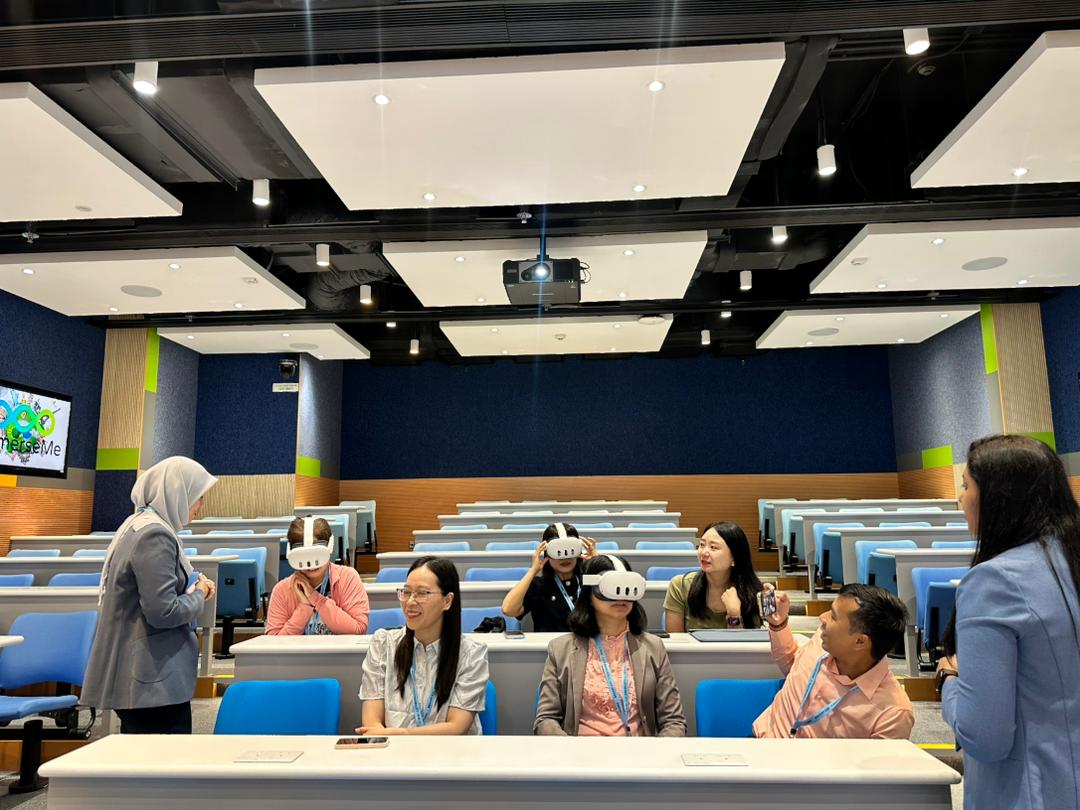
Dr Kumutha Raman (far right) demonstrates the VR technology used in her research at the AsiaTEFL 2025 International Conference, where she presented a paper with co-author Dr Nurin Erliani (far left) from Universiti Putra Malaysia.
For schools and universities, these issues mean considering whether students have suitable devices, reliable internet access and technical support. Teachers also need training and resources to plan activities with a clear learning purpose that help students apply what they practise.
“VR is not meant to replace teachers. It gives students another space to practise, while teachers continue to guide their learning and help them apply what they have learnt in real-life situations.”