International Webinar Malam Apresiasi Kreativitas Anak Teknik 

Visual impairment remains a major global challenge, with more than 2.2 billion people experiencing some form of vision loss. While traditional mobility aids such as white canes and guide dogs provide essential assistance, they often have limitations in complex or unfamiliar environments. To overcome these constraints, a robotic guide system was developed using an Arduino-based architecture designed to enhance safety, mobility, and independence for visually impaired individuals. 

The proposed system integrates ultrasonic and infrared sensors to detect obstacles in real time, ensuring accurate environmental awareness. Users receive audio feedback through a Bluetooth-connected mobile application, enabling seamless communication between the device and the user. For individuals with hearing impairments, the system incorporates vibration-based alerts, providing an additional layer of accessibility. A joystick module offers optional manual directional control, while an RFID authentication mechanism enhances security by preventing unauthorized usage. 

Functionality tests with target users demonstrate promising results, showing significant potential to improve navigational confidence, reduce reliance on caregivers, and enhance safety in both urban and controlled environments. The system prioritizes practicality, affordability, and user adaptability, making it a strong candidate for future product innovation and large-scale implementation to support the visually impaired community. 

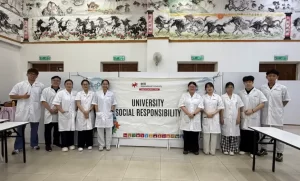
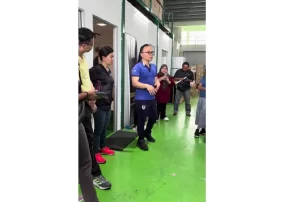
  • University students benefited from this sharing session. 
  • The awareness about SDGs in the direction of Secure and Sustainable is being transferred. 
  • The impact is, more students will join our activities in INTI IU next year. 

More Posts